by Margaret Kimberley, published on Black Agenda Report, January 14, 2026
Law enforcement in the United States are responsible for more than 1,100 deaths in a typical year. This level of bloodshed goes unnoted even when police killings are deemed newsworthy and attract public attention. Police impunity is accepted and normalized by millions of people.
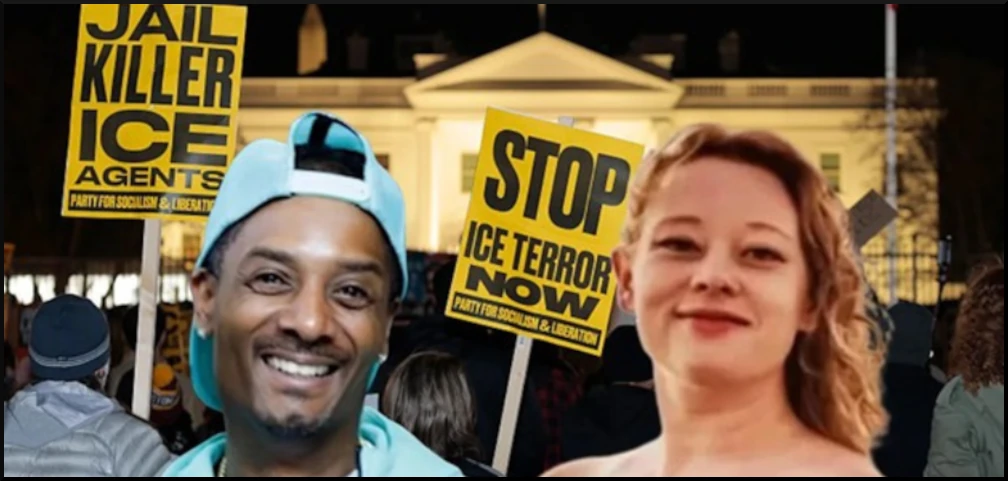
The fatal shooting of Renee Nicole Good by Immigration and Customs Enforcement (ICE) officers in Minneapolis, Minnesota, has ignited a firestorm of condemnation and protest across the country. The Trump administration unleashed ICE not just on undocumented immigrants, but on anyone who opposes their actions in any way, or, like Good, may be in the line of fire because they attempted to protest. ICE officers have assaulted not just the people they seek to capture, but also people trying to defend them, and charged them criminally with obstruction. The scenes of assaults and violent kidnappings are shocking to the conscience of millions of people and have become a focal point for protest in the U.S.
Despite the righteous outrage evoked by Nicole Good’s killing, however, it is important to remember that her experience was not at all singular. The Mapping Police Violence project reports that at least 1,182 people were killed by police in the United States in 2025, an average of at least three people every day. There were only seven days in 2025 during which there were no documented instances of police killing anyone.
It is inevitable that the shooting raises discussions on racism and state violence, as well it should. But white people like Ms. Good can also be found on this awful list. Of the 1,182 people killed by police in 2025, 397 were white. It is still true that Black people are the most likely to be killed by police, but the level of carnage itself is striking, with the U.S. once again being an outlier nation in a terrible metric.t
Periodically, a police killing will electrify public attention, as happened with George Floyd, also in Minneapolis, in 2020. The video footage of his murder galvanized masses of people around the country in numbers that had not been seen for decades. Yet the focus on highly publicized cases obscures a disturbing fact. State violence is normalized to such an extent that what is a common occurrence is treated as though it is a rarity.
Of course, it is very necessary to dissect and to analyze body camera footage and videos from bystanders, and as always, to question law enforcement accounts of their actions. But there is a larger question at work about rights we think we have when we actually don’t, and how what passes for a criminal justice system very rarely punishes murder when committed by people who wear law enforcement uniforms.
There is another recent case of a fatal shooting committed by ICE. On December 31, 2025, a Black man named Keith Porter was shot to death by an off-duty ICE officer in Los Angeles, California. The Los Angeles police have not identified the shooter nor have they provided information on their investigation, allowing the Department of Homeland Security to comment on its own agency, which refers to Porter as an “active shooter” who allegedly exchanged gunfire with the ICE officer. This response to Porter’s killing is far more typical, with the victim’s actions being questioned while the person who took his life is defended or, as in this case, is allowed to disappear altogether.
The outrage expressed after the shooting of Renee Good gained national attention because it involved ICE in a state specifically targeted by the Trump administration for enhanced enforcement, and—of course—because she was white. Yet the righteous response is partly misguided because the narratives almost always express shock that a white woman was killed. But, in reality, white people are killed all the time by police, an average of once every day. Of course, Black people are also killed every day by police, but as a smaller percentage of the population, that number is an indicator of the high levels of oppression exercised against Black people.
Protests surrounding police murders follow the same sad pattern of temporary media attention, righteous indignation, and calls for reform or abolition, while little is said about the impunity that leads to more than 1,100 people being killed every year. Policing is one of the most well-funded governmental operations in the U.S. ICE is now the biggest federal law enforcement agency, but nationwide, local and state police departments are funded to the tune of $178 billion annually. Not only is ICE the biggest federal law enforcement agency, but its budget is larger than the military budgets of most countries.
The United States is a police state in the truest sense of the term, and the bloodshed that sometimes boils over into national consciousness should be recognized as being common and not a strange occurrence. If that acknowledgement is not made amid the protests, then those protests are for naught.
As Black Agenda Report pointed out in 2017, the drive to keep Black people under control cannot always be controlled and thus, there are white victims. An armed police force given a mandate to kill inevitably will endanger everyone. The genie cannot be put back into the bottle if the use of force is given state sanction.
That sanction comes from the majority of white people, who demand that Black people be surveilled, locked up and shot. The Minnesotans who took to the streets to denounce the killings of George Floyd and Renee Good are to be commended, yet they are the outliers in their community. Police violence is normalized because it is what millions of other white people want. When members of that same group are victimized, they are caught in a conundrum. Disputed accounts about what transpired before ICE officer Jonathan Ross shot Renee Good are largely biased in his favor. Showing any skepticism about his actions would create troublesome cognitive dissonance.
Good is that odd white person who has been vilified because she was murdered by an agent of the state. The Department of Homeland Security said that her actions constituted “domestic terrorism.” The President and Vice President of the United States have both called her “violent,” “radical,” and a participant in “classic terrorism.” Porter gets the usual treatment. The man who shot and killed him was a resident of the same apartment complex. Porter’s family said he was firing into the air in a New Year’s Eve celebration and posed no danger to anyone. Currently, there are no witnesses to the shooting, and there is no video evidence. The account of his unnamed killer is given credence and protection. Keith Porter’s family has secured legal counsel but if his case follows the usual trajectory, they may win monetary damages but the leveling of any criminal charges against his murderer is highly unlikely.
The U.S. Department of Justice is not investigating Good’s killing but is instead investigating her wife and her actions, and her background. Six federal prosecutors recently resigned, reportedly in protest over the choice of the investigation target. Minnesota state prosecutors are asserting their rights to carry on an independent investigation. So it is possible that there may be some justice for Good But it is extremely unlikely that there will be any for Porter. Regardless of the outcome, Good is not coming back to life.
The U.S. often refers to nations named as enemies as “state sponsors of terrorism.” It doesn’t mean much except that the country doesn’t act in ways that the U.S. wants. State-sponsored terrorism is far more common in this country, and it comes under the guise of providing protection. The perpetrators may be ICE or the NYPD, or LAPD or some other iteration. When killing is justified by the agents of these entities, then Renee Good, Keith Porter, and more than a thousand unnamed people every year, will pay the price as long as the determination to give a license to kill continues.
Margaret Kimberley is the author of Prejudential: Black America and the Presidents. You can support her work on Patreon and also find it on Twitter, Bluesky, and Telegram platforms. She can be reached via email at margaret.kimberley@blackagendareport.com.