by Ben Arthur Thomason, published on Covert Action Magazine, December 11, 2025
[This is the fourth part of a series on Syria and the effects of CIA intervention there, tied for the one year anniversary of the Syrian “revolution.” See Part I, Part II, and Part III.—Editors]
This is a modern day revisit of the Brits bringing the al-Saud family to power in Arabia backed up by the barbaric and regressive Islam of Wahabism. [jb]
How do you sell the idea of a moderate rebellion without alienating the extremists who will do the actual fighting?
When foreign powers started supporting armed groups to overthrow the Ba’athist government in Syria after 2011, they were unsure about who could, or should, take Damascus.
Even within the leadership of the Obama administration, some figures, such as President Barack Obama and Vice President Joe Biden, were skeptical that intervention would not descend into another unpopular regional boondoggle while others, such as Secretary of State Hillary Clinton, pushed for a hardline stance to back those groups whom she called “the hard men with the guns.”
It was a sensitive situation, especially because the main armed actors quickly revealed themselves to be Sunni sectarian theocrats aligned with groups such as al-Qaeda and the Muslim Brotherhood.
The U.S. and Salafi militants in the late Global War on Terror
Since September 11, 2001, the U.S. had ostensibly been at war with al-Qaeda and the violent internationalist fanaticism that, according to the U.S. government, it represented and spread across the world.
The Americans were still directly engaged in combat against al-Qaeda and their allied group, the Islamic State of Iraq (ISI), in 2011 when the civil war in Syria, which borders Iraq, broke out.
The U.S. justified intervention abroad for the first decade of the 21st century under a narrative of fighting the Global War on Terror, specifically against the Sunni Arab variety of terror represented by al-Qaeda which was blamed for the attacks of 9/11.
Yet the situation in Syria, like Libya, offered another chance for the U.S. to go back to its traditional policy of empowering religious reactionaries in Muslim-majority countries to fight America’s secular nationalist and socialist enemies.
The U.S. and Western powers entered a tense relationship with the anti-Assad militant groups as the Syrian War progressed. The U.S. and its allies would quietly supply hard- and soft-power support and, in return, the militant groups would fight the Syrian government, renounce attacks on the Western powers, including Israel, and work with the Western powers to shape their international public relations.
According to internal documents from government contractors working on covert Western soft-power programs in Syria during the 2010s, Western governments were willing to work with theocratic and sectarian militias fighting the Ba’athist government up to, but excluding, the Islamic State, which later became known as the Islamic State in Iraq and Syria (ISIS).
ISIS’s predecessor, ISI, had for years fought a bitter sectarian struggle against the U.S. and Shia Muslims in Iraq, and ISIS was both unwilling to give up its war against the U.S.-backed Iraqi government and refused to adapt itself to Western public relations demands or renounce attacks on the West itself.
On the other hand, Jabhat al-Nusra, the Syrian al-Qaeda branch that grew out of ISI, and its leader, the now-current president of Syria, Ahmed al-Sharaa (nom de guerre Abu Mohammad al-Julani), was more pragmatic and pliable.
Nusra and Sharaa maintained a brutal sectarian theocratic vision for Syria internally, particularly against the Shia, but they avoided attacks on the West and Israel, distanced themselves from the Islamic State and international Jihadism, and showed flexibility in working with Western powers and their allies.
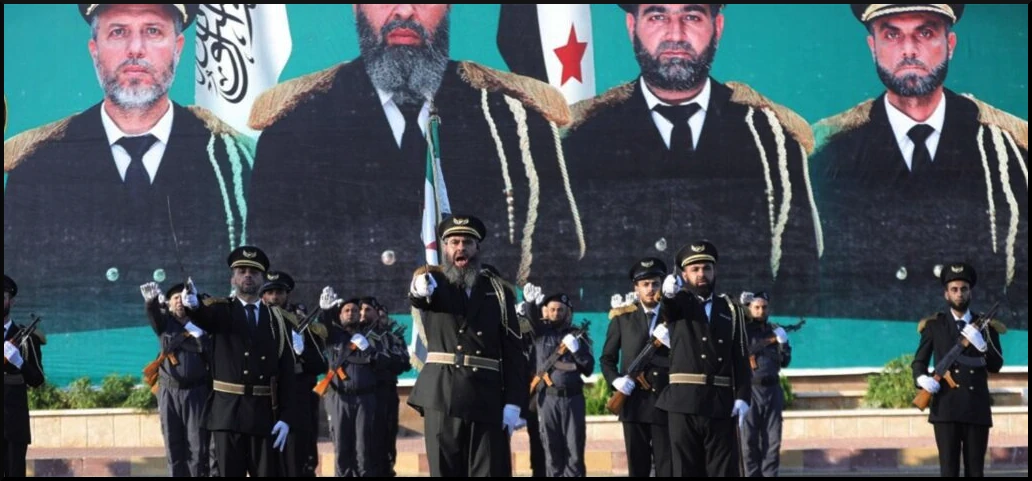
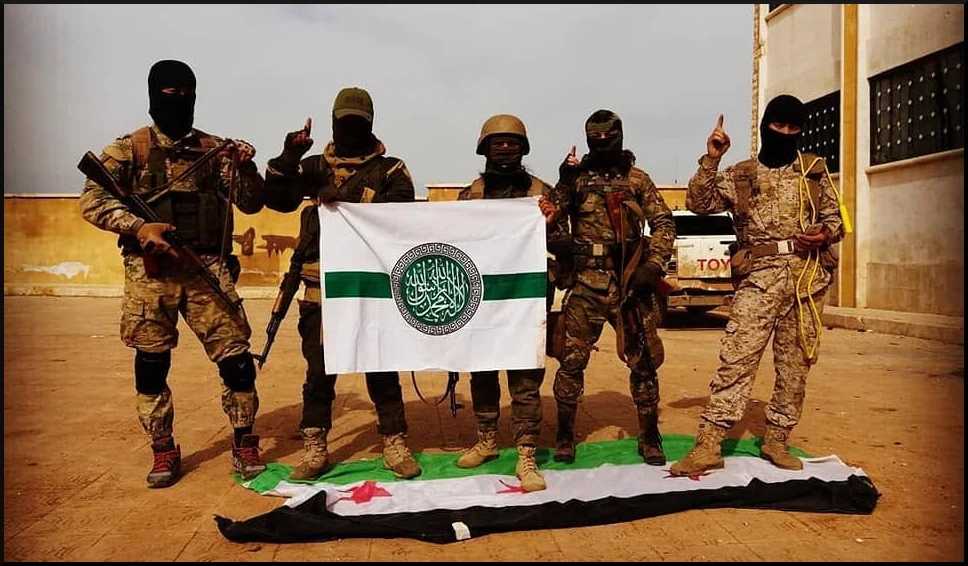
By 2017, they had distanced themselves publicly from al-Qaeda and rebranded themselves as Hayat Tahrir al-Sham (HTS).
Sunni sectarian allies of the West in the Syrian Civil War
The U.S. and its Western allies from 2012 onward claimed they would only support “moderate” armed groups in Syria. Western powers defined “moderate” as groups with a non-sectarian, liberal democratic vision for a future Syria, but in practice the groups they supported often failed to meet even these low standards.
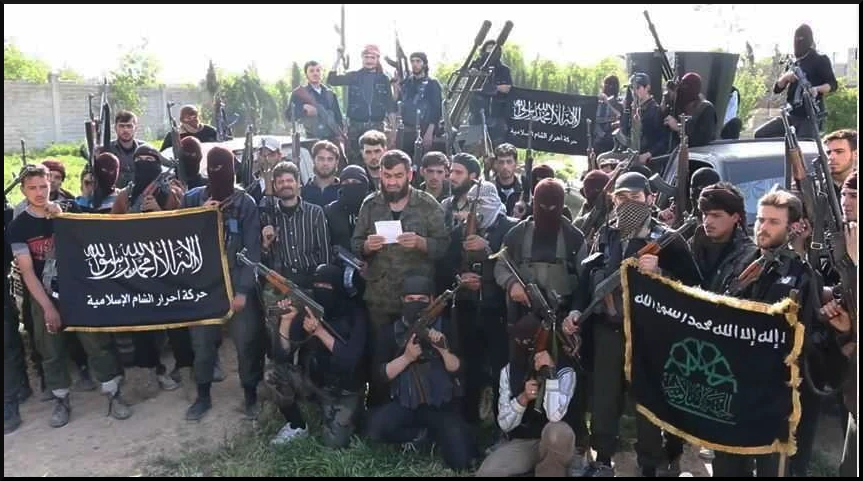
Militias that received aid included violently sectarian, theocratic, and anti-democratic Salafi organizations: Harakat Nour al-Din al-Zenki, Ahrar al-Sham, and Jaysh al-Islam. Al-Zenki was promoted as a member of the moderate opposition that was vetted directly by the CIA and received BGM TOW anti-tank missiles.
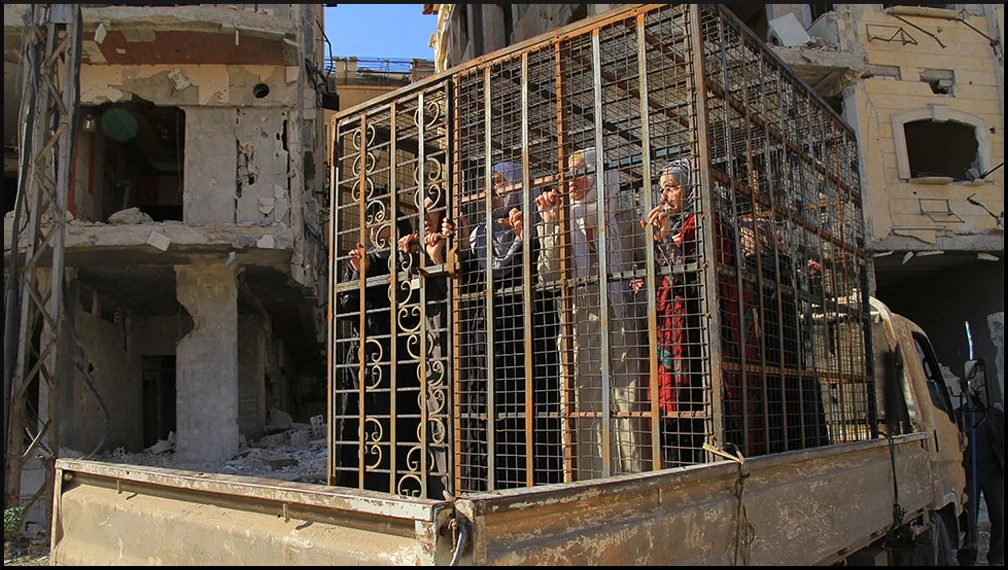
Yet, by 2015, the public relationship with Zenki had to end after journalists and human rights groups released reports of atrocities committed by Zenki associates.
Ahrar al-Sham, which earned the nickname the “Syrian Taliban,” committed sectarian atrocities against Alawite civilians in Latakia in 2013 when its fighters entered the province, and they kidnapped hundreds of civilians from 2012 to 2016.[1]
Coyly courting al-Qaeda and friends
The Western powers, specifically the U.S. and UK, developed an ambiguous relationship with al-Sharaa and Nusra/HTS that reflected splits within Western governments and the tense history between the West, Sharaa, and the ideas and groups Sharaa represented.
Sharaa and his al-Nusra Front (later HTS) had been a major armed faction fighting for the overthrow of the Ba’athist government in Syria before the rise of ISIS, and became the dominant rebel organization after ISIS’s decline.
Nusra led a coalition of other Sunni theocratic groups in taking full possession of Idlib City from the Syrian government in April 2015, a great achievement in a war where the rebels time and again failed to conquer and hold major cities.
After the Syrian government took back complete control of Aleppo City at the end of 2016, government forces increasingly concentrated armed rebels and anyone associated with them into Idlib Governorate through a combination of conquests and transfer agreements in other parts of rebel-held Syria.
This created a sort of Jihadi Jurassic Park made up of various sects of Sunni theocratic armed groups (including many foreign fighters) but dominated by Sharaa and his allies. Idlib Governorate, thus, became the place where the armed rebels maintained the most authority for the longest time.
It also became the place where the Western powers had the most time and space to implement their pro-rebel soft-power programs. Leaked UK government documents show that, between at least 2014 and 2017, the UK government directed its contractors in Syria to explicitly and directly oppose ISIS, but to only implicitly and “indirectly” oppose al-Nusra and later HTS.
One UK “statement of requirement” for their contractors working to support Syrian civilian and rebel media from 2017 states that the overall objective of the project was to “contribute towards positive attitudinal and behavioural [British spelling] change” by “promoting and reinforcing moderate values in Syria.”
They would do this through supporting the approved so-called moderate armed opposition as well as so-called moderate civilian opposition government, security, civil society, and service providers. The document then states that, “Indirectly, these activities should support the rejection of extremist alternative narratives through bolstering the moderate alternative.”[3]
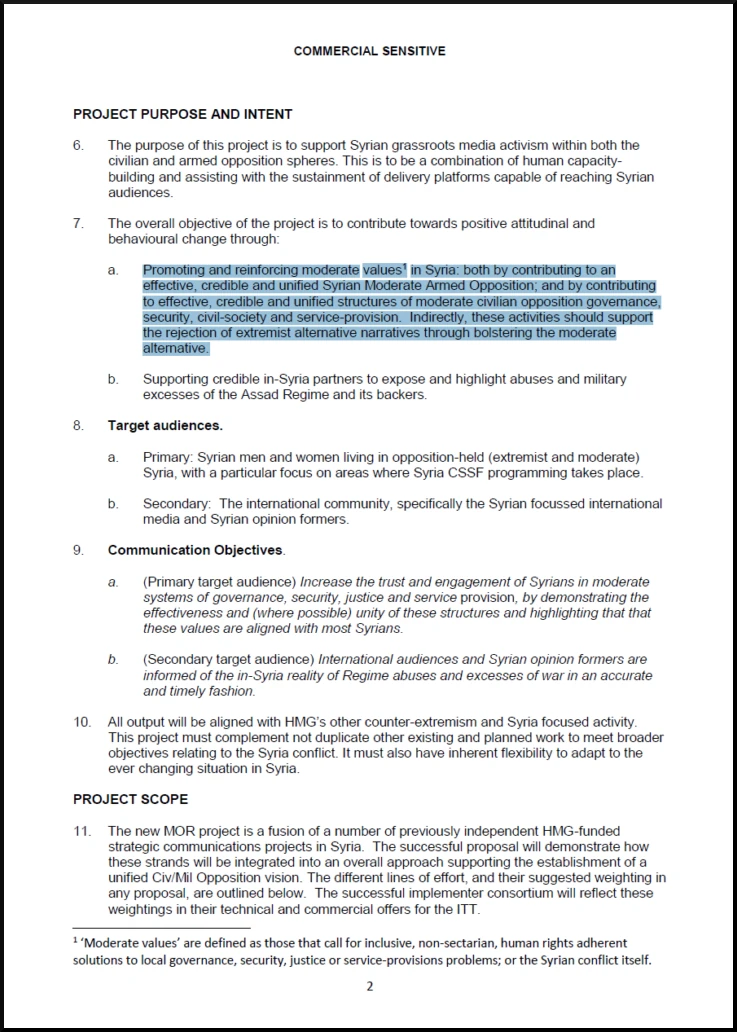
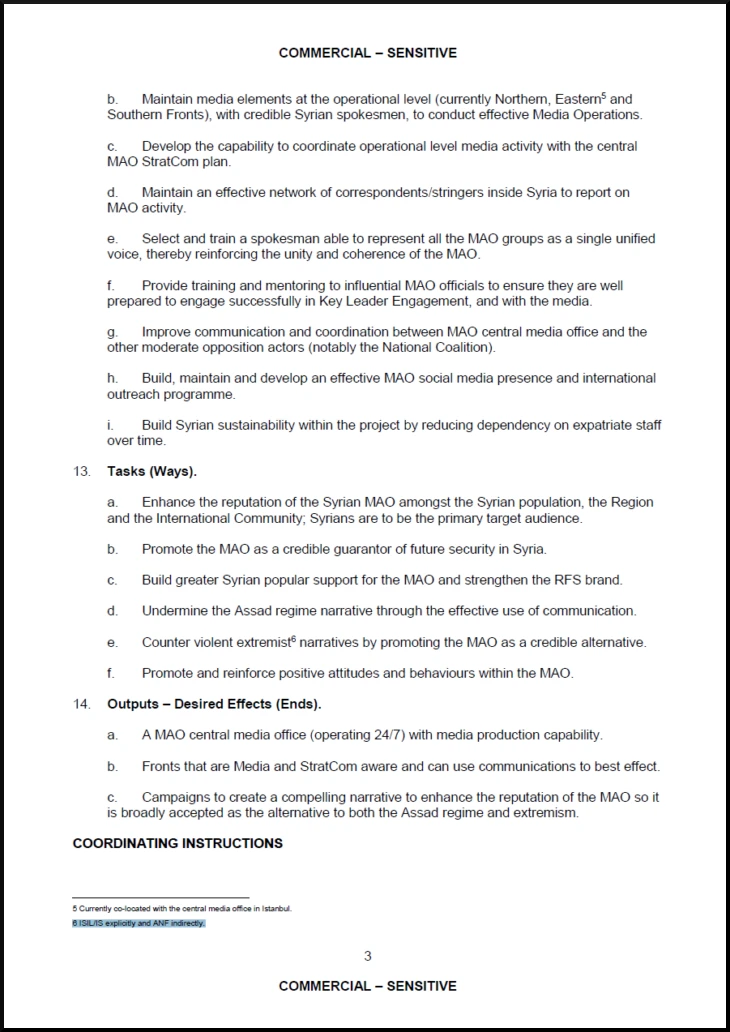
But what did it mean to “indirectly” counter violent extremists such as al-Nusra? The UK government documents do not provide a clear answer, but the policy can be inferred. In practice it meant promoting an idealized image of groups that the UK and its allies supported, while not openly antagonizing extremist, sectarian and theocratic groups so long as they were not affiliated with ISIS.
These policies created a large gray zone between the explicitly condemned ISIS and the publicly supported so-called moderate rebels. Al-Nusra/HTS operated, and ultimately took over Syria, from within that gray zone.
The Western soft-power consortium realized that many of the armed groups they supported could not consistently meet the “moderate values” as the UK defined them, and they developed clear protocols to relocate operations and cut ties if any partner groups threatened UK interests by, for example, defecting to ISIS.
Consortium partner and UK-government contractor Albany Associates stated in one document that it had developed media skills and strategy for Ahrar al-Sham and Jaysh al-Islam, two groups notorious for their sectarian religious extremism.
Yet Albany Associates assured its funders that its methods would avoid tying them to “groups who may or may not be at any given time viable, effective, respected in the community, or, in fact, moderate.”[6]
Idlib City “liberated” by Syrian al-Qaeda and Taliban
When Nusra and its allies took over Idlib City in late March and early April of 2015, UK government contractor Analysis Research Knowledge (ARK) described it in their internal documents as Idlib’s “liberation.” As the Salafi forces took control of Idlib City, ARK and its partners in media and civil society were among the first on the ground to help establish order as well as provide a narrative to understand the developments for Western governments and news outlets which otherwise had little access to Idlib.
The UK government had to request that ARK provide an overview of the situation, and ARK “mobilised its stringers and networks in civil society organisations, the Idlib Free Police, the Syria Civil Defence, and the political opposition to produce a rapid three-page analytical report and a verbal briefing.”[7]
This analytical report is not publicly available, but ARK’s description of the conquest in its internal documents as the “liberation” of Idlib, as well as its later reports about Idlib indicate that it viewed the Salafi takeover of the city as, if not a positive development, at least a situation it could work with.
Al-Nusra in 2015 conquered Idlib alongside fellow Sunni Islamist militias, namely Ahrar al-Sham.[8] Some influential Western voices searched for ways to benefit from the developments in Idlib.
The Washington Post allowed Ahrar al-Sham’s head of foreign relations to publish an opinion piece whitewashing the group as moderate revolutionaries in July 2015.
The presence of UK public relations contractors in Idlib City and the documentation showing their support for Ahrar al-Sham indicates that Western covert soft-power support had a role in crafting that narrative and giving Ahrar al-Sham a platform to promote it in The Washington Post.[9]
In August 2015 former CIA Director Petraeus suggested that the U.S. should split away “moderate” al-Nusra fighters from al-Qaeda to fight ISIS and Assad.[10]
Al-Nusra leader Ahmed al-Sharaa proved to be responsive to this vision, distancing his organization from al-Qaeda and rebranding its name and symbols, first in 2016 and then in 2017.
Maintaining a moderate rebellion without alienating al-Qaeda
ARK and its consortium partners continued, and in fact expanded, their operations in Idlib following the Salafi conquest. By 2017, large collections of Sunni rebels from various parts of Syria were losing their territories and being concentrated in Idlib.
Ahmed al-Sharaa (aka Abu Mohammad al-Julani) rebranded al-Nusra as Jabhat Fatah al-Sham in July 2016 and dropped its explicit al-Qaeda affiliation. At the same time Sharaa’s group sought to distance itself from al-Qaeda, it acted to consolidate control over Idlib and the other Sunni rebels.
On January 20, 2017, Sharaa and his allies fought a brief war with Ahrar al-Sham and its allies.
On January 28, Sharaa joined with several other Islamist groups which had concentrated in Idlib, including a large faction of Ahrar al-Sham, to form Hayat Tahrir al-Sham (HTS).
HTS emerged victorious by July 23, 2017, taking complete control of Idlib City and about 60% of Idlib Governorate.[11]
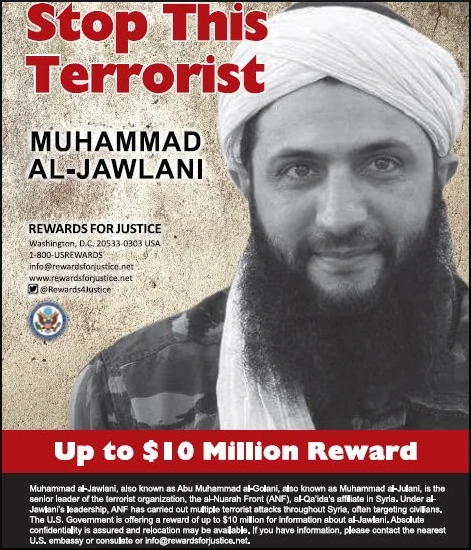
This was between June and July, 2017, just as HTS was taking complete control of the city.[12]
Idlib City Council operated under the administration of Jaish al-Fatah, the Salafi coalition led by Ahrar al-Sham and al-Nusra, later HTS, that had controlled Idlib City since April 2015.[13]
On August 15, according to Western-backed Syrian reporters, the Idlib City Council called for the formation of a “Salvation Government.” Shortly thereafter, on August 20, the council refused a demand that they hand over civil institutions to HTS and, on August 28, HTS seized Idlib City Council and confiscated much of the local assets that had been provided by foreign powers.[14]
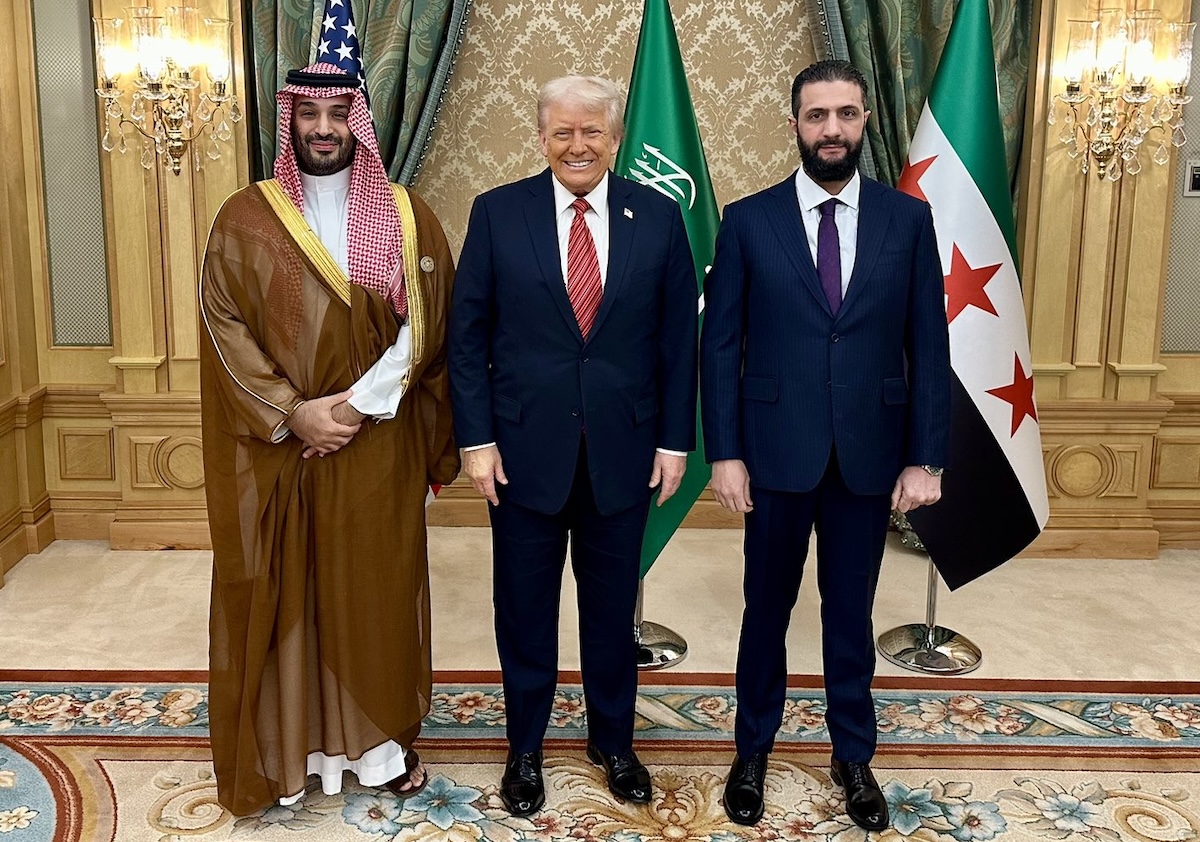
HTS organized a Syrian General Conference and, on September 11, 2017, the conference delegates agreed to form a new government based on Islamic law. In November 2017 HTS declared the establishment of the Syrian Salvation Government, the regime that Sharaa would lead in Idlib until HTS took over Damascus in December 2024.[15]
Ben Arthur Thomason received his Ph.D. in American Culture Studies from Bowling Green State University in 2024. He specializes in the history, culture, and geopolitical economy of U.S. imperialism and soft power.