By published on Workers World, January 14, 2026
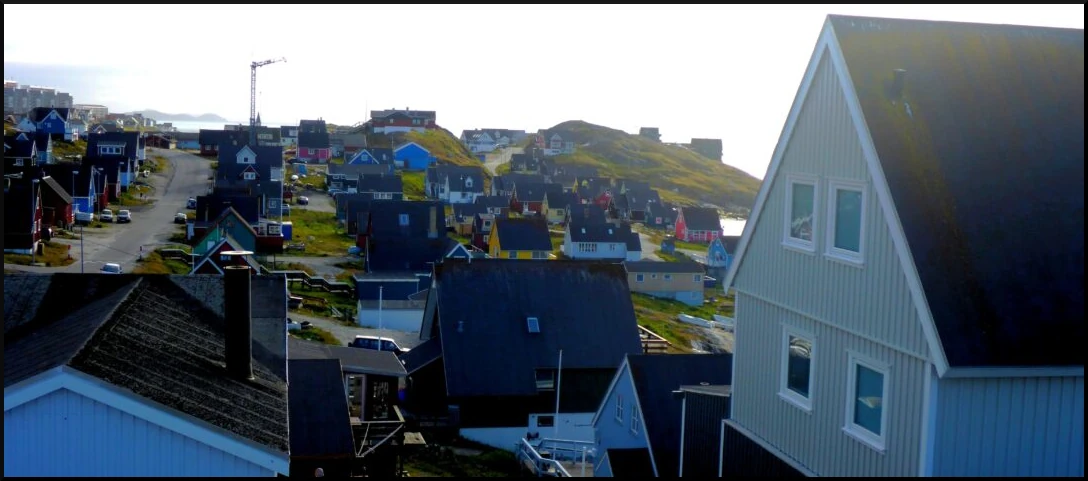
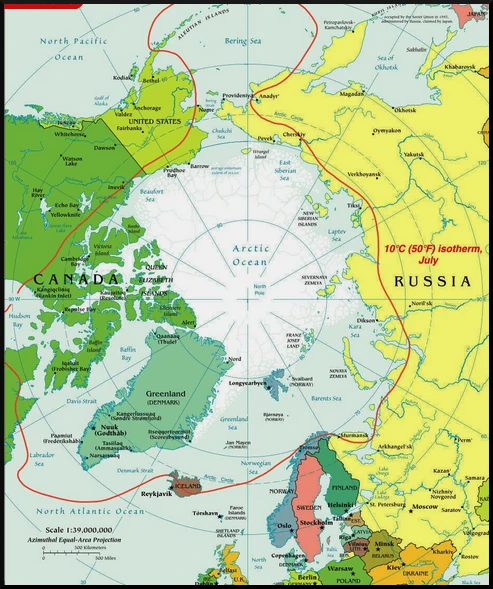
Kalaallit Nunaat, the Indigenous name for Greenland, is the world’s largest island and is located astride the Arctic Circle in North America. It is about three times the size of Texas, but unlike Texas, much of the center of Kalaallit is covered by an ice sheet over a mile thick in many areas. Of the 58,000 people who live in Kalaallit, approximately 90% are Indigenous. The official language of Kalaallit is Kalaallisut (Greenlandic).
Only a small portion of the most southerly region of the island is arable, so local hunters and fishers get their protein from sea mammals, fish, wild birds, muskox, caribou and small land mammals. While a lot of food is imported, these wild sources are a significant part of people’s diet and income and are sold in fish markets and grocery stores alongside imported goods. Efforts are made to ensure sustainable harvesting.
The majority of the Kalaallit (also the name of the people) live in 18 communities and work in modern sector employment — transportation, education, health care, commerce and tourism. Others, particularly those who live in very small rural settlements, depend on hunting and fishing and live off the land.
 We have intentionally changed the focus in this article, because the Indigenous people who live in Kalaallit are almost entirely ignored in the current political discourse (if bombast, bullying and intimidation can be called that). These are the people who would be dramatically and negatively impacted by the plans Donald Trump’s administration is touting. We want to restore them to their rightful place at the center!
People have lived on this island for at least 4,000 years when it was first settled by small groups of Arctic adapted Inuit people from Siberia. About 800 years ago, other people who had developed ways to exploit the island’s rich marine resources — whales, seals and walrus — settled along the coasts and fjords. About the same time that Indigenous people began their expansion, Norse farmers from Iceland established settlements along a few fjords in the south of the island. Their settlements, never larger than a few thousand people, lasted about 200 years. Their numbers dwindled and they died out for reasons still not well understood. There appears to have been only very limited contact between the Indigenous Inuit and the Norse.
By the 18th century, European ships from many nations were coming to the waters around Greenland to fish and to hunt whales and walrus for the oil and hides demanded by the technology of the times. In 1721, the Danish kingdom sent ships to look for any remaining Norse but found the settlements were gone and the land was instead occupied by Inuit. Missionaries came to convert the Inuit and to exploit the local resources. Eventually some small settlements were established.
This is some of the setting in which the strange campaign by Trump to “own Greenland” is taking place.
Why does Trump want Greenland?
This question has been extensively and repetitiously discussed in the bourgeois press. No answers yet posed make sense, which may be because reason isn’t involved. But the leadership of Denmark and NATO are taking Trump’s threats very seriously.
Is it only that Trump wants to be the first president in decades who has expanded the square miles under U.S. jurisdiction? Or is it to satisfy the tech industry’s hunger for rare earth minerals for their capitalist expansionary plans, including artificial intelligence (AI)?
It must be said that many minerals categorized as rare earths are not in fact rare. However, the processes involved in extracting them from their matrices are either very expensive or environmentally very destructive. As people who care about clean water, air and land, the Kalaallit do not support trashing their fragile environment and cannot be depended on to agree to this type of development.
Also, the private ownership of land is not allowed in Kalaallit.
And finally, is it really security concerns or the concerns about other nations accessing northern shipping lanes that would make their products more competitive? The weakness of this pair of geopolitical concerns is that the treaties now in place let the U.S. military make use of land all over the island.
The most gruesome example of how the U. S. military uses its access to Kalaalitt comes from 1953.
During the Cold War against the former Soviet Union in 1953, the U.S. wanted to expand the Thule Air Base (now Pituffik Space Base) to store nuclear weapons unbeknownst to the Danes or Kalaallit. Having nuclear weapons was against the base agreement. To make way for the expansion, a small Kalaallit community had to move on four days’ notice from their ancestral lands to an area 80 miles away with poorer hunting. The community’s descendants are still angry about their forced relocation. Furthermore, a B-52 carrying some nuclear weapons crashed and spread contamination that wasn’t discovered until years later. Plutonium contamination of shellfish in the seabed where the plane crashed is still showing up in tests today.
Greenlanders’ united response
A joint communiqué, signed by Prime Minister Jens-Frederik Nielsen and the leaders of all the parties in Greenland’s Parliament — Democrats Party (Demokraatit), Fellowship Party (Atassut), Forward Party (Siumut), Inuit Community (Inuit Ataqatigiit) and Signpost Party (Naleraq) — explicitly invokes both international law and Greenland’s 2009 Self-Government Act, which grants the territory extensive autonomy, including control over natural resources, policing and judicial affairs.
“We elect our own parliament. We form our own government. And we will determine our own path,” the leaders declared, emphasizing that while Greenland values its partnerships with the U.S. and Western allies — particularly through the Thule Air Base agreement — it will not accept ultimatums disguised as security policy.
Greenland belongs to Greenlanders!